Takashi's Japanese Dictionary

A blog for learning Japanese that introduces Japanese slang words and Idioms!

  • Home
  • Dictionary Tools ▾
    • Furigana and Definition Lookup
    • Japanese Synonym Finder
    • Katakana Word Converter
  • Blog Posts ▾
    • Latest Posts
    • Phrases by Topic
    • Slang
    • Idiom
    • Column
    • Grammar
  • Lesson Slides ▾
    • For Complete Beginners
    • For Intermediate/Advanced Learners
  • Vocab List
  • Social Media
  • About
  • 英語学習サイト

Myth and Meaning of “The moon is beautiful, isn’t it?” in Japanese

April 30, 2020

Meaning In Japanese, 月が綺麗ですね (tsuki ga kirei desu ne) literarily means “The moon is beautiful, isn’t it?”. Surprisingly, however, it could also contain the hidden meaning — “I love you”. Origin It is widely believed that the romantic meaning of “The moon is beautiful, isn’t it?” in Japanese was coined by Sōseki Natsume (夏目漱石), a renowned Japanese novelist in the 19-20th century who was portrayed in the former 1000 yen banknote. Allegedly, its origin traces back to when he used to work as an English teacher — when he saw his student directly translating “I love you” into Japanese, he supposedly said, “Japanese people never say things like that shamelessly….Read More

Meaning and Origin of Reiwa, Heisei and Shōwa, Japan’s Imperial Eras

April 30, 2019

This post explains Japan’s imperial era (gengō) and also briefly describes the origins, meanings and zeitgeists of the latest eras ‘Reiwa’, ‘Heisei’ and ‘Shōwa’. What’s 元号 (Gengō)? Japan’s imperial era is called 元号 (gengō). It is used alongside the Western calendar in official documents such as drivers’ licenses and health insurance cards. Usually, the era ends upon the death of each emperor and followed by the enthronement of his successor, but the current era ‘令和’ has started following the abdication of Emperor Akihito.  How the name of gengō is coined Japan’s era name is determined after a great number of discussions among scholars, experts and cabinet members. There are also…Read More

Meaning and Origin of 平成 (Heisei)

April 30, 2019

Meaning and Origin of 平成 (Heisei) The name of ‘平成‘ (Heisei) reflects the wish for world peace. It was coined in reference to two Chinese phrases ‘内平外成’ meaning ‘peace inside and prosperity outside’ and ‘地平天成’ meaning ‘the peaceful and prosperous world’. The former appears in ‘書経’ (‘Shujing’,‘The Book of Documents’), and the latter in 史記 (‘Shiji’, ‘The Records of the Grand Historian’), both of which are ancient Chinese literature. The Zeitgeist of Heisei Era Bubble Economy The Heisei era got off to an auspicious start, with Japan’s over-inflated economy reaching its pinnacle. At the time, the top 5 companies by market capitalization in the world were all Japanese, and the…Read More

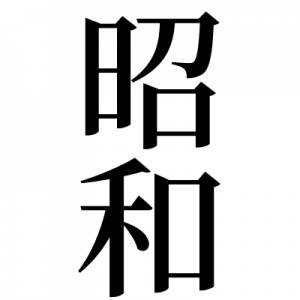
Origin and Meaning of the Japanese Era “Shōwa (昭和)”
April 6, 2019

昭和 (Shōwa) is the Japanese imperial era that spanned 62 years from December 25th, 1926 to January 7th, 1989.Read More

Meaning and Origin of Reiwa (令和) Era in Japanese

April 1, 2019

Today, Chief Cabinet Secretary Yoshihide Suga has announced the name of Japan’s new era, ‘令和’ (Reiwa). The new era is set to start on May 1, when Crown Prince Naruhito will become the new Emperor after Emperor Akihito abdicates on April 30. 令和 will be the 248th era in the history of Japan.Read More

  • « Previous Page
  • 1
  • 2
  • 3
  • 4
  • Next Page »
ブログランキング・にほんブログ村へPVアクセスランキング にほんブログ村

Search on Takashionary
(e.g. 'food', 'cat', 'idiom')

Trending Posts

  • Myth and Meaning of “The moon is beautiful, isn’t it?” in Japanese
  • 30+ Japanese Words for “Very” and Their Nuances
  • List of Similar and Confusing Kanji With Different Meanings
  • 8 Funny and Cute Japanese Cat Idioms
  • 40 Old Japanese Slang Words to Sound Funny (or Weird)
  • Meaning of 卍 (manji) and マジ卍 (Maji manji) in Japanese
  • Meaning and Difference of ガチ (gachi) and マジ (maji) in Japanese
  • List of 50+ Japanese Words to Describe Personality
  • Real Meanings of “Hentai” in Japanese
  • 9 Essential Kansai Dialect (Kansai-ben) Words and Phrases
  • Words that Rhyme Both in Japanese and English
  • Japanese Slang 帰宅部 (kitaku bu) Meaning “Go-Home Club”
  • 凸, 凹, 〆, 卍: Meaning of Weird and Funny Japanese Kanji
  • 5 Meanings of ペラペラ (pera pera) in Japanese
  • Funny Japanese Gaming Slang Terms
  • Ashita, Asatte, Shiasatte, Yanoasatte: 13 Japanese Words Describing Dates
  • Meaning and Usage of なんでやねん (nandeyanen) in Japanese
  • Classic Japanese Puns (Dajare, ダジャレ) You Should Know
  • Japanese Words and Phrases About Love
  • Zagin De Shīsū: Japanese “Back Slang” From 1980s Explained
  • List of Japanese Kanji Words with Unusual Readings
  • Meaning of 二刀流 (Nitouryu) “Expert of Two Things” in Japanese
  • 20 “Untranslatable” Japanese Phrases with Specific Meanings
  • 11 Bizarre Japanese Slangs Untranslatable Into English
  • Essential Japanese Words About Drinking/Sake
  • 一発屋 (Ippatsu ya) Meaning ‘One-Hit Wonder’ in Japanese
  • Meaning of ぼっち (Bocchi) and クリぼっち (Kuri Bocchi) in Japanese Slang
  • Japanese Idiom: “Wanna Borrow a Cat’s Hand”
  • Meaning of “Three-Day Monk” (三日坊主, mikka bouzu) in Japanese
  • “Gakkī Loss”: Meaning of ロス (“Loss”) in Japanese

Popular Posts

  • Myth and Meaning of “The moon is beautiful, isn’t it?” in Japanese
  • Meaning of 卍 (manji) and マジ卍 (Maji manji) in Japanese
  • Real Meanings of “Hentai” in Japanese
  • 4 Meanings of ノリ (Nori) in Japanese Slang
  • 40 Japanese Words for “Many/Much” (Ooi, Ippai, Takusan, …)
  • List of Similar and Confusing Kanji With Different Meanings
  • 9 Essential Kansai Dialect (Kansai-ben) Words and Phrases
  • Meaning of プロ驚き屋 (“Professional Surprised Man”) in Japanese Slang 2023
  • What 賢者タイム (Kenja Time) Means in Japanese Slang
  • 5 Meanings of ペラペラ (pera pera) in Japanese

Words by Theme

  • 40 Japanese Words for “Many/Much” (Ooi, Ippai, Takusan, …)
  • List of Similar and Confusing Kanji With Different Meanings
  • 9 Essential Kansai Dialect (Kansai-ben) Words and Phrases

Idiom

  • 5 Meanings of 気 (ki) and 30 気-related Japanese Phrases
  • List of 50+ Japanese Words to Describe Personality
  • Four Meanings of 坊主 (Bouzu) in Japanese

Japlish

  • Japanese Wasei-Eigo List (“Japlish”) and Their Meanings
  • Meaning of “Paper Driver” in Japlish (Japanese English)
  • 深夜テンション (shinya tension) Meaning “Midnight High” in Japanese Slang

Slang

  • 5 Meanings of ペラペラ (pera pera) in Japanese
  • ドヤ顔 (doya gao) Meaning ‘Showing-Off Face’ in Japanese
  • 女たらし (onna tarashi) Meaning ‘Lady’s Man’ in Japanese

Column

  • Myth and Meaning of “The moon is beautiful, isn’t it?” in Japanese
  • Meaning and Origin of Reiwa (令和) Era in Japanese
  • イチロー (Ichiro): What He Means to Japanese Baseball Fans

Grammar

  • Essential Grammar in Kansai Dialect (関西弁, Kansai ben)
  • Slang Meaning of 全然 (Zenzen) Without ない (Nai)
  • Grammar and Differences Between に (ni) and で (de) in Japanese

日本語記事

  • 「背水の陣」のように決死の覚悟で挑む状況を英語で
  • 「遠慮のかたまり」と「遠慮する」を英語で説明
  • 「猫を被る」を英語に訳す
  • 「一理ある」を英語に訳す

Categories

Copyright © 2026 · All Rights Reserved